10 years after Brexit, Keir Starmer’s resignation highlights Britain’s deeper issues
06, Jul 2026June 23, 2026, 7:27 AM EDT
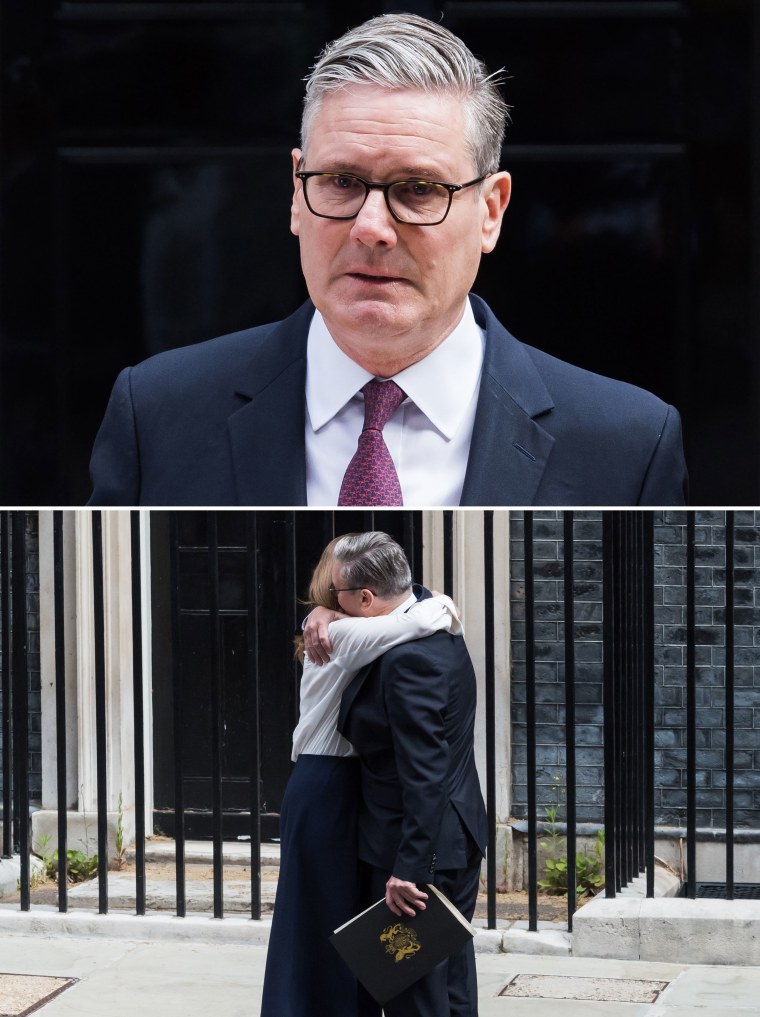
LONDON — Another emotional speech delivered. The prime minister’s lectern wheeled out at Downing Street.
Now, 10 years to the day after the Brexit vote and with six prime ministers having been felled by economic and political turbulence, the country once again looks to a new leader — and back to the crucible that helped set it on this torrid journey.
Britain has become a member of an unenviable club.
Only a select handful of countries, including Peru, Romania and Bulgaria, have experienced more recent churn at the top of government than the United Kingdom, which is about to get its seventh prime minister in a decade after Keir Starmer announced his resignation Monday.
The rot began long before the 2016 vote to leave the European Union.
Britain has been trapped in a cycle of economic and political shocks, starting with the 2008 financial crisis and culminating with high inflation fueled by wars in Ukraine and the Middle East.
Together, that has strained its finances and politics, with Britain’s historical two-party system fracturing into a patchwork of increasingly tribal alliances and factions. It has also left the country searching for a stable role among Europe, China and an increasingly unpredictable and transactional United States.
Andy Burnham, the runaway favorite to replace Starmer, would inherit all of that.
His supporters have high hopes for his mix of charisma, man-of-the-people vibe and pro-business agenda, which helped make Manchester, where he recently served as mayor, the fastest-growing economic region of the U.K.
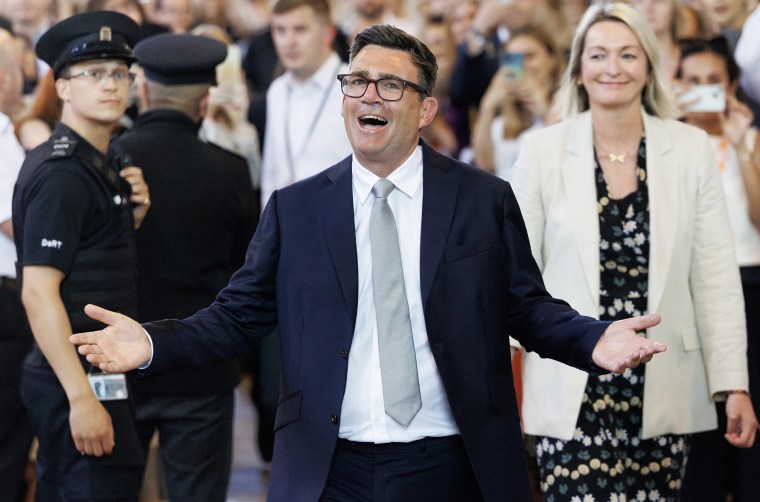
The widespread skepticism was nonetheless palpable when Burnham was sworn in as a lawmaker Monday, having won a special election last week to challenge Starmer. “Rome is saved,” a lawmaker heckled wryly.
“Andy Burnham has a huge job just to understand the structural forces at play and even more to provide people with some sort of reassurance that life isn’t out of control,” said David Henig, the former assistant director at Britain’s International Trade Department.
The instability stems from “huge demands on government from an aging society, limited growth in a globalized economy and the constant drumbeat of social media,” said Henig, now a London-based director at the European Center for Political Economy, a think tank in Brussels.
Britain is still the world’s sixth-largest economy, it has one of five permanent seats on the United Nations Security Council, it has an estimated arsenal of 225 nuclear weapons, and it has outsized cultural impact internationally thanks to English’s continued status as much of the world’s lingua franca.

Two years after the 2008 global financial crisis, Britain elected a center-right Conservative-led government that slashed real-terms budgets across many government departments, including education, and welfare for children, housing and people with disabilities. School spending per pupil fell by 9% from 2010 to 2019. And welfare budgets were 10% lower than they might have been by 2020.
The receipts of that underinvestment in public infrastructure are redolent today in crumbling hospitals, schools and roads.
Real-term average wages have not increased since 2008 after accounting for inflation. And austerity cost the average Briton half a year of life expectancy from 2010 to 2019, according to a study by the London School of Economics.
With the country cash-strapped, the Arab Spring of 2011 set off a wave of mass migration into Europe, which coincided with the widespread perception that the extra numbers were placing further strains on already creaking resources of jobs, housing and healthcare.
That’s despite Britain’s receiving far fewer asylum applications in 2015 (591 per million residents, per E.U. figures) than Hungary (17,699 per million), Sweden (16,016 per million) and Germany (5,441 per million).
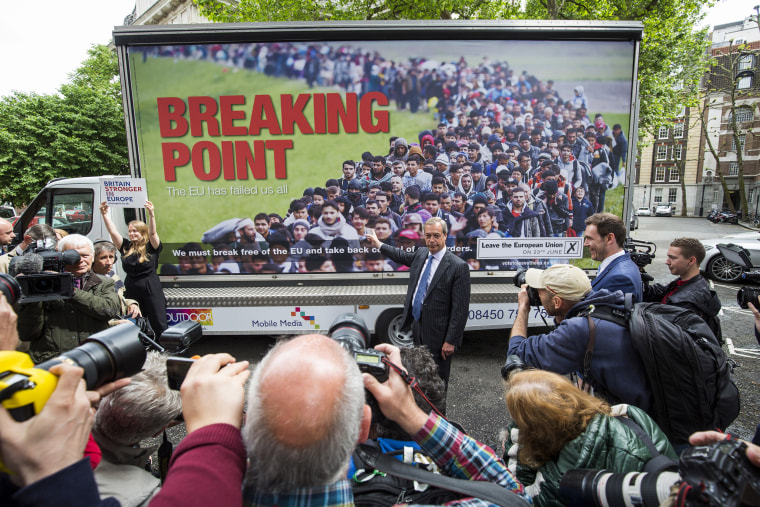
Academics have long since tracked the correlation between economic downturns and antipathy toward immigration. And so it was throughout Europe, with a surge in support for far-right parties that continues today.
In Britain, that manifested itself in the 2016 Brexit referendum, in which a majority of voting British people chose to decouple themselves from the E.U. Trump ally Nigel Farage, now leader of Reform UK, promised them greater control of their borders and legal and economic freedom from the trading bloc.
In fact, by last year Brexit meant the economy was 6% to 8% smaller than it would have been otherwise, according to the U.K. in a Changing Europe, a London think tank.
It didn’t lower immigration, either, with the decline in European incomers offsetting those from outside the E.U. and net migration growing from 335,000 in 2016 to 944,000 in 2023.
“Why is the economy so unstable today? Brexit. We might as well say the quiet part out loud,” said Scott Lucas, an international politics professor and longtime Westminster watcher at Ireland’s University College Dublin.
According to Guto Hari, director of communications for Boris Johnson, the Conservative ex-prime minister who backed the project, voters became more impatient after Brexit.
“Whereas we used to be more cool and rational, the electorate is more fickle, it wants more instant gratification, and it gets frustrated more quickly,” he said.
In Brexit, people were “sold the idea that there are simple answers to complex questions — which there aren’t,” Hari added.
Then came Covid, which saw Johnson’s government embroiled in a series of scandals, including the hosting of parties at No. 10 Downing St. during lockdown.
An already fragile trust in public institutions was eroded further.
The only industrialized economy whose people have less trust in their government was Czechia’s, according to a 2024 survey by the Organization for Economic Co-operation and Development, which surveys and tracks those developed nations.
The next jolt was Russia’s full-scale invasion of Ukraine in February 2022, which spiked energy costs throughout Europe as its leaders tried to boycott their years of dependence on the Kremlin’s gas supplies.
Britain’s reliance on imported natural gas for heating and cooking left it particularly vulnerable to the ensuing Europe-wide price shock, with inflation hitting a 40-year high of 11% in late 2022.
The bleak idiom of people’s having to choose between “heating and eating” reflected how bad things were for many Britons. In 2022-23, 4.3 million children were living in poverty, 700,000 more than in 2010, government figures showed.
Starmer rode the wave of discontent against the ruling Conservatives to win a historic landslide in 2024.
His government oversaw a decline in net migration, a reduction in hospital waiting lists and modest economic growth. But change has come more slowly than many demand, and in any case Starmer’s standing had already been irretrievably eroded by a series of U-turns and scandals.
The recovery has been further sidelined by Israel and the United States’ launching their February war on Iran and the consequent global shock to oil markets and spiking prices for mortgages and other types of borrowing.
In much the way that befuddled several of his predecessors, Starmer has struggled to break free from that economic straitjacket: how to grow the economy while keeping his promise not to raise taxes or spook the bond markets by borrowing more.
Burnham will face a similar conundrum.
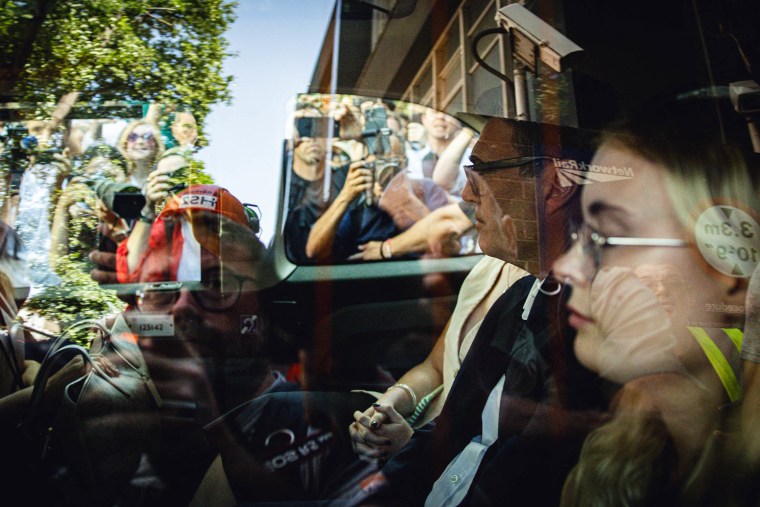
Burnham has suggested he would resist doing either, but he has said he wants to bring utilities companies “under greater public control” and reform Britain’s costly, dysfunctional social care system, a white whale that has evaded successive leaders.
A further wrinkle is the growing consensus across Europe that it needs to dramatically increase its defense budgets to cope with a reality in which the U.S. is withdrawing its historical support, while Russian aggression is only increasing.
“I have no idea whether Burnham will be more successful,” said Dominic Grieve, Britain’s ex-attorney general and former Conservative grandee lawmaker. “He is much more charismatic than Starmer, but he has not at present shown a willingness to speak difficult truths to the public.”