Flight cancellations and delays continue after storms dump snow in the Midwest and head east
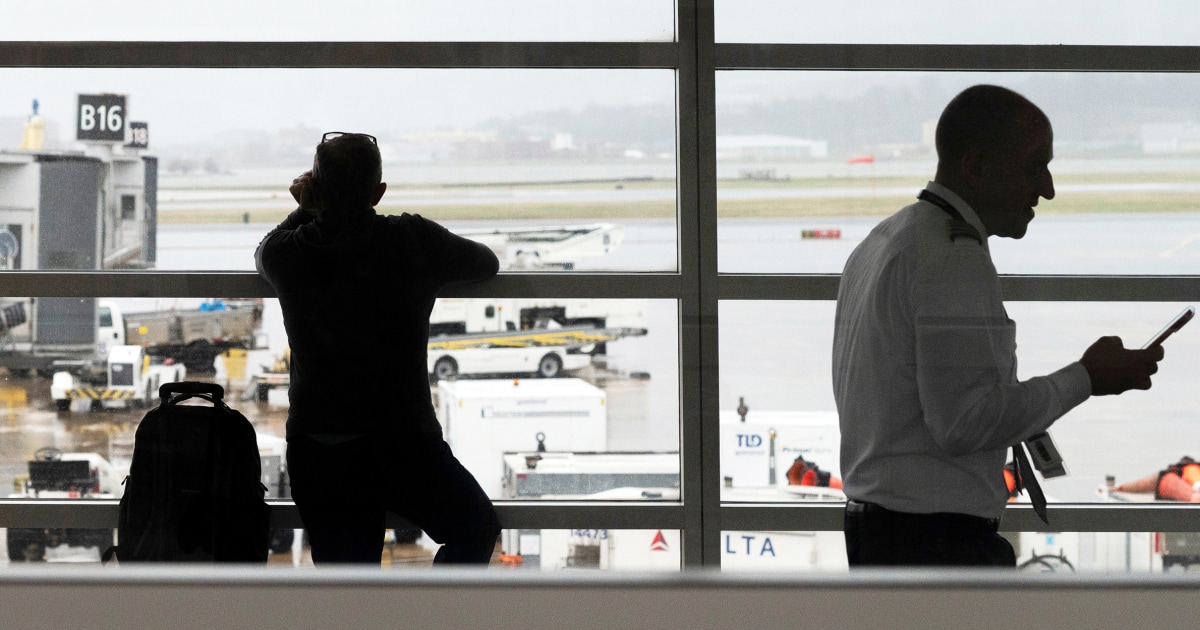
18, Jun 2026ATLANTA — Hundreds of flights were canceled or delayed Tuesday, one day after powerful storms swept across the eastern half of the country and upended air travel in a cross-section of cities. Travelers have faced additional jams at airport security checkpoints as a partial government shutdown strains screener staffing.
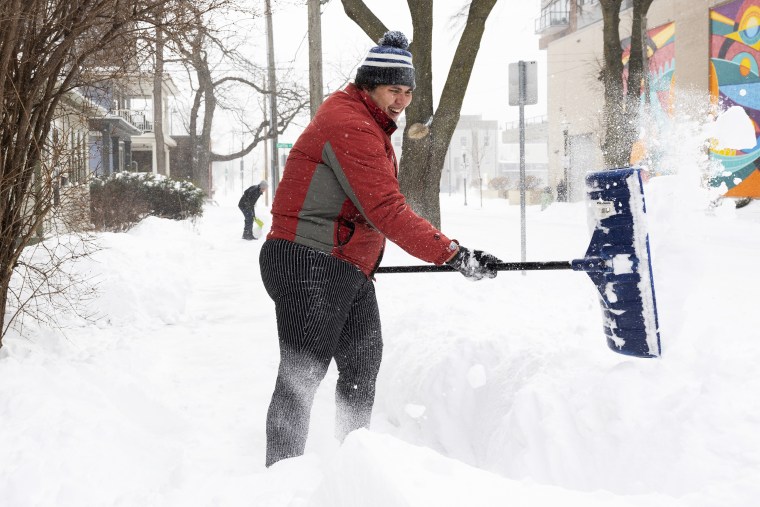
Mount Arvon, Michigan, got 39 inches of snow, and Green Bay, Wisconsin, got more than 26 inches, according to the National Weather Service in Green Bay.
The storms also ushered in cold temperatures, with cities in the East 20 to 35 degrees colder than yesterday. Washington, D.C., for example, dropped 26 degrees in just 90 minutes Monday.
The airport disruptions come at an already challenging time for air travel, in part because the shutdown that began Feb. 14 has pressured staffing at some security checkpoints. At the same time, airports are crowded with spring break travelers and fans heading to March Madness, the annual NCAA men’s and women’s college basketball tournaments.
More than 750 flights scheduled to fly into, out of or within the U.S. had been called off as of early Tuesday, and about 1,300 were delayed, according to the flight-tracking site FlightAware.
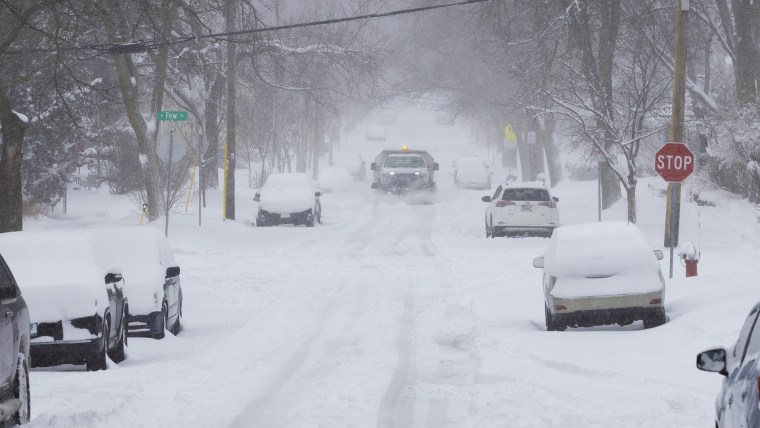
Flight delays and cancellations piled up Monday at some of the country’s largest airports, including those in New York, Chicago and Atlanta. The storm system that dumped heavy snow across the Midwest raced toward the East Coast with high winds reaching gusts near 50 mph in parts of New York, the National Weather Service said.
Strong winds will continue Tuesday, with 34 million people still under wind alerts across the Appalachians, the interior Northeast and New England. That will lead to additional travel delays until the winds relax Tuesday afternoon and evening.
Wind gusts up to 49 mph are possible in Buffalo, New York, while Philadelphia and New York could get gusts around 35 mph.
Freeze alerts are in effect across the South for 42 million people from central Texas to coastal South Carolina. The cold air means more light snow is possible across the Great Lakes and the Appalachians on Tuesday.
Snow will be generally light, except on the Tug Hill Plateau, which could get 6 to 8 inches.
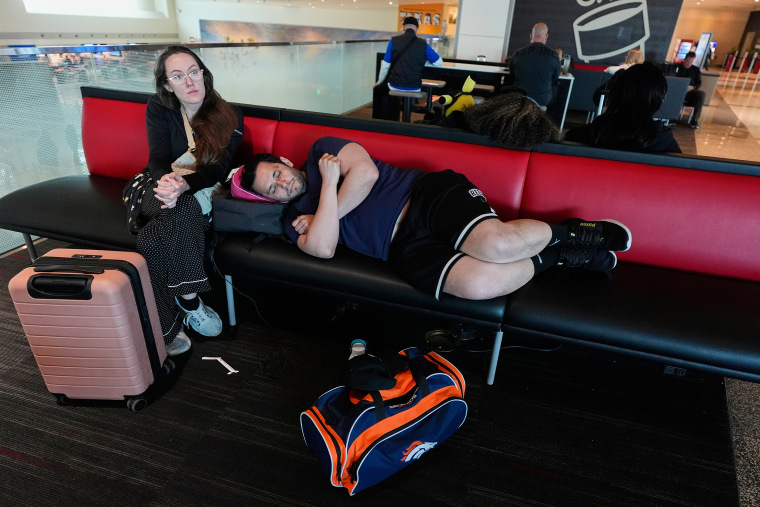
Kelly Price, who was trying to get home to Colorado after a family vacation in Orlando, Florida, said her Sunday night flight wasn’t canceled until early Monday.
“By that time, the only place for us to sleep was the airport floor. So we’re all tired and frustrated,” she said, adding that the soonest she and her family could book another flight would be Tuesday afternoon.
Impact to major airport hubs
The nationwide cancellations Monday included about 600 in and out of Chicago O’Hare International, more than 470 at Hartsfield-Jackson Atlanta International Airport and over 450 at LaGuardia Airport in New York City, according to FlightAware.
Citing severe weather, the Federal Aviation Administration ordered ground stops at Hartsfield-Jackson and at Charlotte Douglas International Airport in North Carolina and ground delays at John F. Kennedy International Airport in New York and Newark Liberty International Airport in New Jersey.
Danielle Cash found herself stranded in St. Louis on Sunday as she was trying to get home to Tampa, Florida, after a weekend girls’ trip to Las Vegas. Now she’s spending several hundred dollars more than planned on a hotel room in a snowy city she wasn’t dressed for.
“It was 80 degrees in Tampa when I left and then going to Vegas,” she said. “And it was 90 degrees in the desert.”
Cash said she has booked on a flight to Tennessee before she returns to Tampa by Tuesday afternoon.
TSA staffing strains some checkpoints
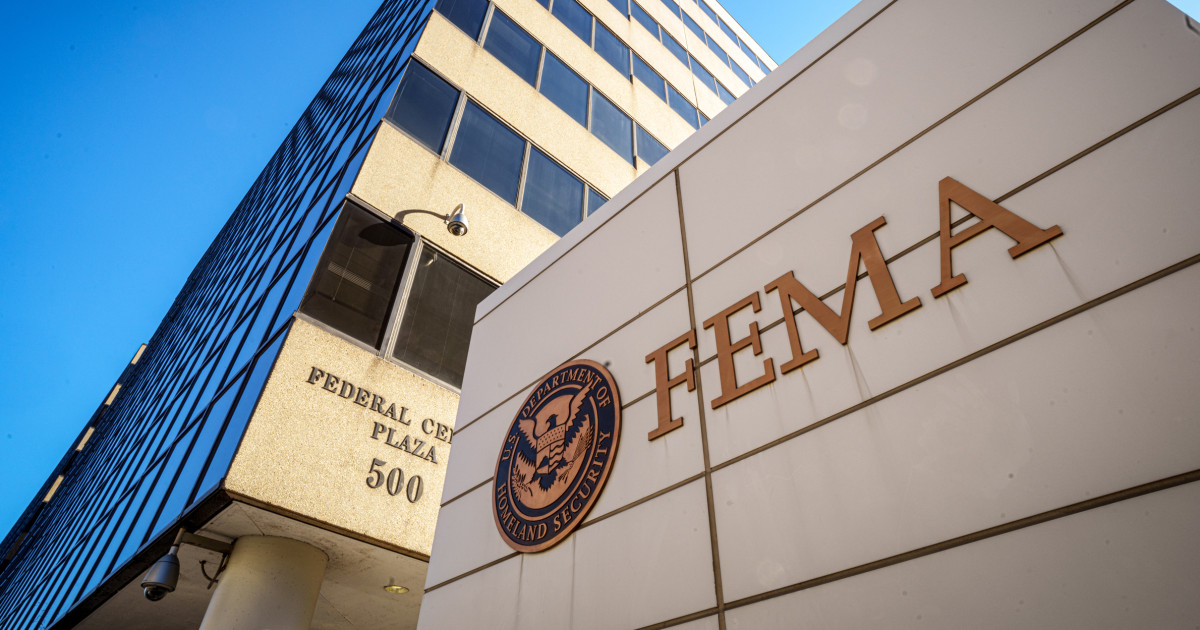
The storms unfolded just as airport security screeners missed their first full paychecks over the weekend. The partial government shutdown affects only the Department of Homeland Security, which includes the Transportation Security Administration.
Democrats in Congress have said Homeland Security won’t get funded until new restrictions are placed on federal immigration operations following the fatal shootings of Alex Pretti and Renee Good in Minneapolis this year.
It is the third shutdown in less than a year, leaving TSA workers temporarily without pay. Once the government reopens, employees will have to wait for back pay.
Some airports have reported longer security lines because of staffing shortages as more TSA workers take on second jobs, can’t afford gas to get to work or leave the profession altogether. Homeland Security has said more than 300 TSA agents have quit since the start of the shutdown.
Security wait times could worsen
TSA union leaders in Atlanta warned at a news conference Monday outside Hartsfield-Jackson that air travelers could face increasingly long wait times as the shutdown continues. Even so, union leaders said, many officers are still reporting to work despite mounting financial strain.
Many TSA workers “are coping with eviction notices, vehicle repossessions, empty refrigerators and overdrawn bank accounts,” said Aaron Barker, a local leader with the American Federation of Government Employees. Supporters behind him held signs reading “We want a paycheck, not a rain check.”
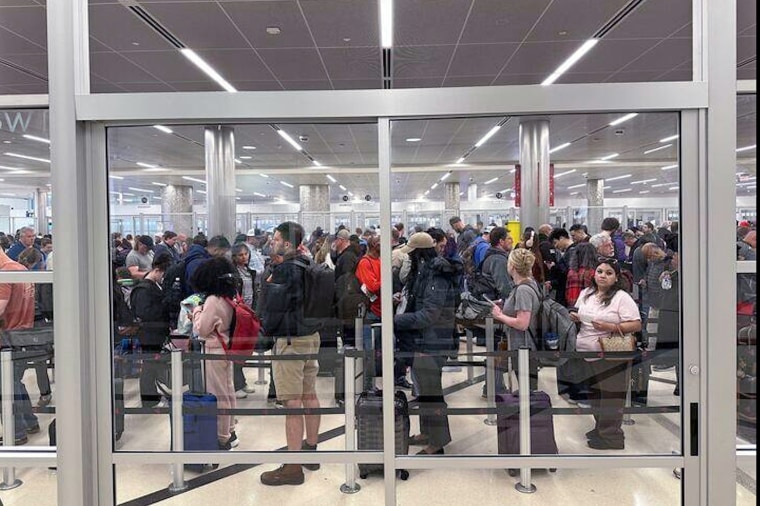
Travelers flying out of New Orleans on Sunday and Monday were advised to arrive at least three hours early “due to impacts from the federal government’s partial shutdown,” Louis Armstrong International Airport said on X. And the airport in Austin, Texas, shared a video on X taken at 5:30 a.m. local time showing the security line spilling out onto the sidewalk outside.
Back in Atlanta, Mel Stewart and his wife arrived four hours earlier than usual for their flight out of Hartsfield-Jackson to make up for longer TSA lines.
“I think it’s being politicized way too much — way too much,” Stewart said Monday of the shutdown. “And these people are working. They work hard, and for TSA people not to get paid, that’s silly.”
Historic March heat wave begins
While parts of the country are freezing, others are sweltering.
Heat alerts are in effect for 38 million people from the San Francisco Bay Area to southern Arizona, including extreme heat warnings.
It is the first time the Bay Area has been under a heat advisory in March. Phoenix is experiencing its earliest heat warning by over a month.
The extreme heat so early in the year will lead to an excess in heat illness, because people aren’t yet acclimated to the high temperatures following the winter months.
Redwood City, California, hit 90 degrees Monday, making it the first of many cities that are likely to set all-time high temperature records for March.
Major cities that could set their March records include: San Francisco, Los Angeles, Phoenix, Las Vegas, Denver and Salt Lake City.
It’s not just individual cities that could set all-time March temperature records; state and national records could be broken, as well. States where records could be threatened include California, Arizona and Nevada.
A forecast of 114 degrees in Mecca, California, would break the U.S. record for the hottest temperature ever recorded in March and April.